
I’ve been doing a lot of thinking lately about the Church and Israel and where some of our modern theology came from, especially dispensationalism. I’ve always assumed that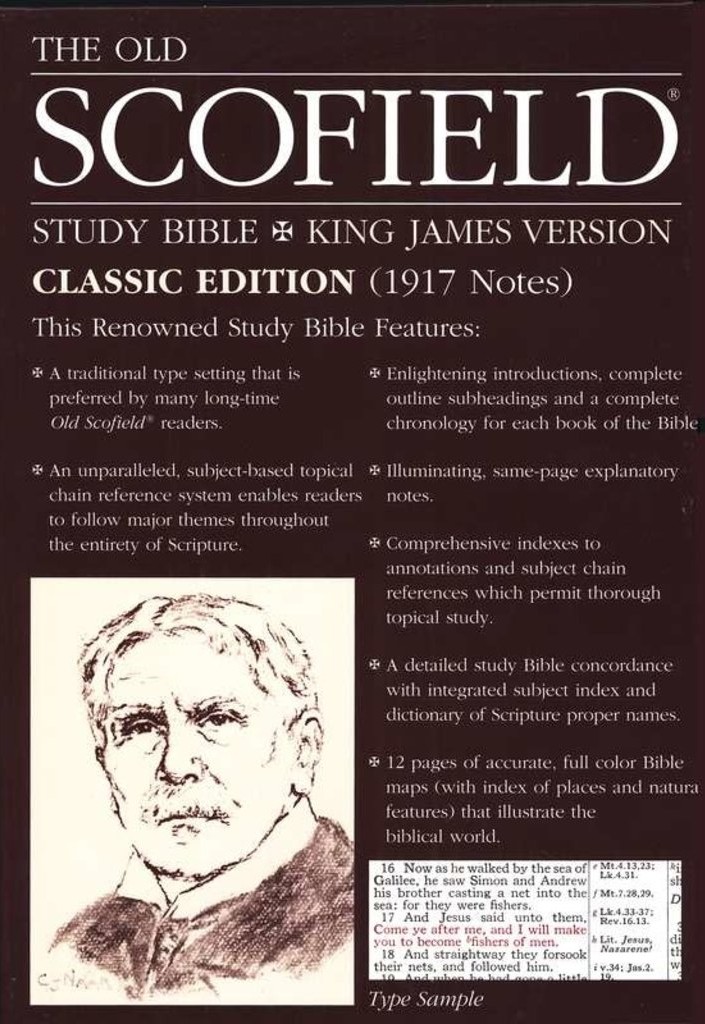 this was the way the Bible was always interpreted and I never studied it out on my own.
Dispensationalism, as we know it today, didn’t come from the early church. It really took root in the 1800s. John Nelson Darby (1800–1882), who was part of the Plymouth Brethren movement, is really where this system began. He divided history into different “dispensations” and separated Israel and the Church into two parallel plans of God. That way of reading Scripture was new.
Those ideas stayed fairly contained until C. I. Scofield popularized them through the Scofield Reference Bible in 1909. The biblical text didn’t change — but the notes did. Those notes put dispensational interpretations right next to the verses, and once that happened, a lot of people assumed that was simply what the Bible taught. Especially because by the early–mid 20th century, the Scofield Reference Bible had become the default study Bible in almost every American evangelical seminary and Bible institutes, especially places like Dallas Theological Seminary, Moody Bible Institute, and Biola, so its notes shaped how generations of Pastors were trained to read Scripture.
But when we take our time and read what Jesus and Paul say throughout the scriptures, that framework starts falling apart.
Jesus never taught two separate peoples of God
He taught that the only way to the Father was through Him and doesn’t matter what culture or nationality you are. You are either going to accept Him or deny Him. Paul never taught two parallel covenants.
And the apostles weren’t preaching delay, they were preaching fulfillment.
Jesus says very plainly, “Do not think that I came to abolish the Law or the Prophets. I did not come to abolish, but to fulfill” (Matthew 5:17). That’s not vague language. Fulfill doesn’t mean pause or push into the future and he plainly says he CAME to fulfill it ALL, meaning everything about his coming fulfilled the law and scripture is clear about how.
Paul says, “For all the promises of God find their Yes in Him” (2 Corinthians 1:20). Not some promises. Not spiritual promises only. All.
He also says, “He Himself is our peace, who has made both one” (Ephesians 2:14). Not partially one. Not spiritually one while still divided later. Just… one.
And then Paul goes even further: “If you belong to Christ, then you are Abraham’s seed, heirs according to promise” (Galatians 3:29). That alone should make us stop and rethink a lot of categories we’ve inherited.
What really stops me, though, was something Paul says in Acts 13. He’s preaching in a synagogue and he says, “We bring you the good news that what God promised to the fathers, this He has fulfilled to us their children by raising Jesus” (Acts 13:32–33).
That’s past tense.
All promises fulfilled to the fathers and then to us. And the fulfillment is tied directly to the resurrection.
Paul’s gospel literally depends on the idea that the promises are no longer lingering into the future.
When you line that up with how the New Testament talks about the promises to Israel, the pattern is consistent.
- The seed promise to Abraham points to Christ (Galatians 3:16).
- The blessing to the nations becomes the gospel going to the Gentiles (Galatians 3:8).
- The Davidic throne is fulfilled in Christ’s kingship (Luke 1:32–33; Acts 2:30–36).
- The new covenant is established in His blood (Luke 22:20; Hebrews 8 ).
- The land promise expands, to all the world. Paul says Abraham would inherit the world (Romans 4:13; Matthew 5:5).
- The temple becomes Christ and His people (John 2:19–21; Ephesians 2:21).
- And the Law is written on hearts through the Spirit (Jeremiah 31; Romans 8 ).
What a downgrade for Israel to say, “Oh God promised to give you one small piece of land back,” when Jesus came and said everyone who believes in Him is brought into one family — Jew and Gentile together. Paul says Abraham wasn’t promised a strip of land at all, but the whole world (Romans 4:13).
And when Jesus said, “Blessed are the meek, for they will inherit the earth”(Matthew 5:5), He wasn’t talking about real estate. He was talking about what belongs to those who choose Him. Why would we shrink Gods promise back to an old Covenant piece of land, excluding Jews from the whole world inheritance, and dividing people when he came to expand the gospel to all?
Then there’s the “one jot or tittle” passage. Jesus says, “Not one jot or tittle will pass from the Law until heaven and earth pass away”(Matthew 5:18).
In Scripture, “heaven and earth” is a way of describing an ordered world of law, worship, temple, and priesthood (see Isaiah 51:15–16; Deuteronomy 32; Jeremiah 4:23–28). In that sense, Jesus isn’t talking about the planet disappearing, but about the Old Covenant order remaining fully intact until it did what it was meant to do.
So applying the definition of, “heaven and earth” as it is interpreted in Isaiah, Deuteronomy, and Jeremiah, means the Old Covenant world.
Even if we continue believing “heaven and earth” means “literal creation”, the logic creates a big problem. Because if literal “heaven and earth” haven’t passed away yet, and not one dot of the Law can pass until they do… why aren’t Christians still keeping all of it? Sacrifices. Feast days. Purity laws. Dietary restrictions.
Paul is pretty clear. He says, “Christ is the end of the Law for righteousness” (Romans 10:4). And, “You are not under the Law, but under grace” (Romans 6:14). Not because the Law failed, but because it worked. And in case anyone feels like going the distance…
Below is an even more exhaustive list:
Acts 10:34–35 — “God shows no partiality, but in every nation anyone who fears Him and does what is right is acceptable to Him.”
Acts 15:8–9 — “God… made no distinction between us and them, having cleansed their hearts by faith.”
Romans 2:11 — “For God shows no partiality.”
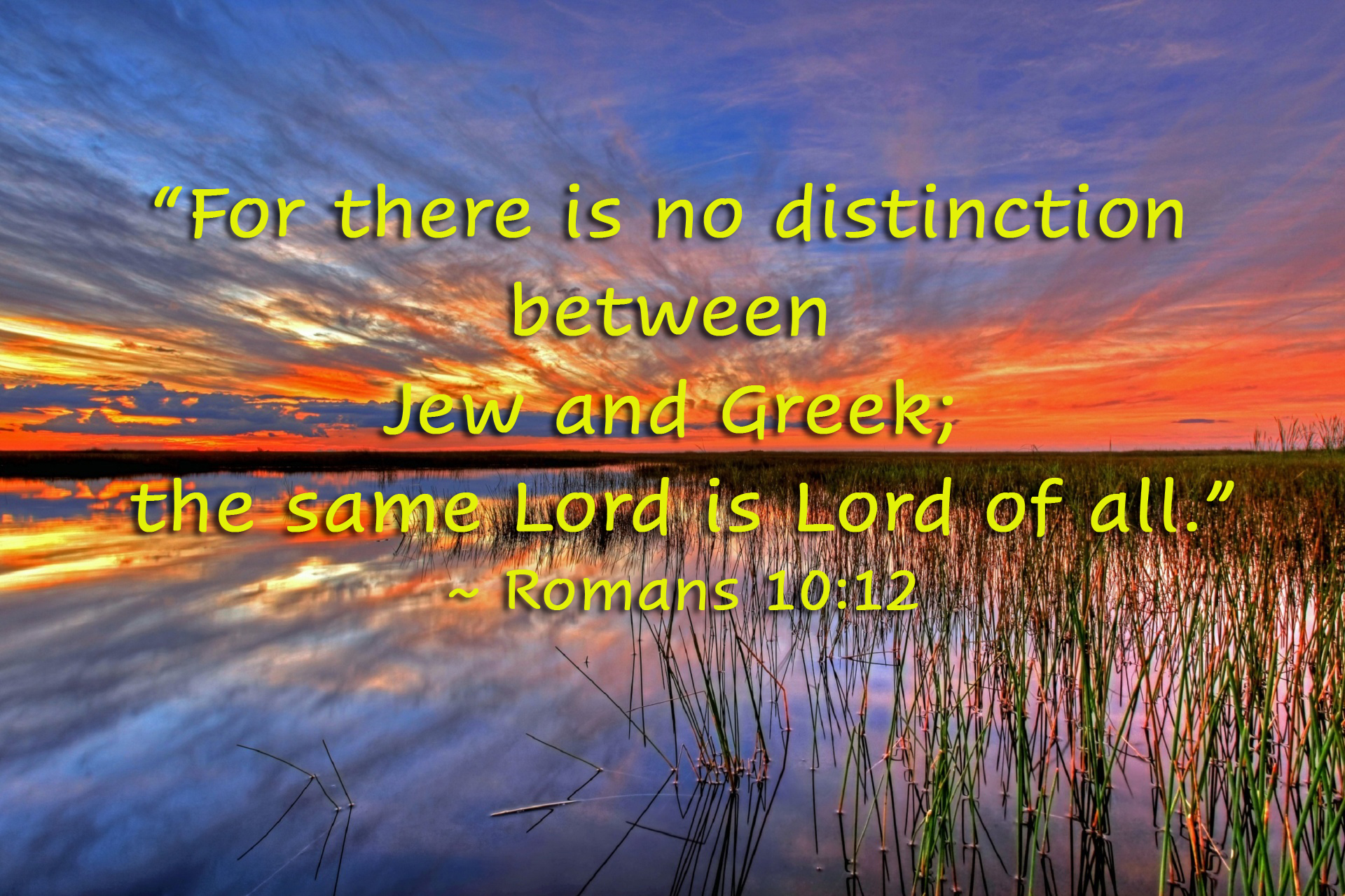
Romans 10:12 —“For there is no distinction between Jew and Greek; the same Lord is Lord of all.”
Galatians 2:6 — “God shows no partiality.”
Ephesians 2:14–16 — “He Himself is our peace… that He might create in Himself one new man.”
Ephesians 3:6 — “The Gentiles are fellow heirs, members of the same body, and partakers of the promise in Christ Jesus.”
Colossians 3:11 — “Here there is not Greek and Jew… but Christ is all, and in all.”
1 Corinthians 12:13 —“For in one Spirit we were all baptized into one body—Jews or Greeks.”
Galatians 3:28 — “There is neither Jew nor Greek… for you are all one in Christ Jesus.”
Romans 1:16 — “The gospel… is the power of God for salvation to everyone who believes, to the Jew first and also to the Greek.”
Romans 3:29–30 — “Is God the God of Jews only? Is He not the God of Gentiles also? Yes, of Gentiles also.”
Romans 9:24 —“Even us whom He has called, not from the Jews only but also from the Gentiles.”
Romans 15:7–12 —“The Gentiles will glorify God for His mercy.”
Isaiah 49:6 — “I will make You a light for the nations, that My salvation may reach the ends of the earth.”
Isaiah 56:6–8 — “My house shall be called a house of prayer for all peoples.”
Amos 9:11–12 (Acts 15:16–17) —“That the rest of mankind may seek the Lord, and all the Gentiles who are called by My name.”
And regarding Abraham…
Genesis 12:3 — “In you all the families of the earth shall be blessed.”
Genesis 15:6 — “And he believed the Lord, and He counted it to him as righteousness.”
Genesis 22:18 —“In your offspring shall all the nations of the earth be blessed.”
Romans 4:11–13 — “The promise to Abraham… was that he would be heir of the world.”
Galatians 3:7–9 —“Those who are of faith are the sons of Abraham.”
Galatians 3:16 — “The promises were made to Abraham and to his offspring… who is Christ.”
Galatians 3:26–29 —“If you are Christ’s, then you are Abraham’s offspring, heirs according to promise.”
Acts 3:25–26 — “God… sent Him to bless you, by turning every one of you from your wickedness.”
Acts 13:32–33 — “What God promised to the fathers, this He has fulfilled to us.”
Luke 1:72–75 —“To remember His holy covenant, the oath He swore to Abraham.”
2 Corinthians 1:20 — “All the promises of God find their Yes in Him.”
Hebrews 2:11 — “He who sanctifies and those who are sanctified all have one source.”
Hebrews 11:10, 16 — “He was looking forward to the city that has foundations… a better country, that is, a heavenly one.”
The major concern for me personally is this…
Jesus says, “For God so loved the world that He gave His only begotten Son, that whoever believes in Him should not perish but have everlasting life” (John 3:16). But believing in Jesus isn’t just believing He exists or that He saves. It also means taking Him at His word.
Early in His ministry, after reading from Isaiah, Jesus says, “Today this Scripture is fulfilled in your hearing” (Luke 4:21). When Jesus stood up in the synagogue in Luke 4, He read from Isaiah 61 about the anointed one bringing good news, freedom, and restoration. Then He stopped mid-passage, sat down, and said, “Today this Scripture is fulfilled in your hearing.”He was claiming that promise for Himself, and the people knew exactly what He was saying. That’s why they were fine with Him for about 30 seconds… and then tried to throw Him off a cliff once it sunk in.
After His resurrection, He explains that “everything written about Me in the Law of Moses, the Prophets, and the Psalms must be fulfilled” (Luke 24:44). And Paul later says plainly that this had already happened: “What God promised… He has fulfilled by raising Jesus” (Acts 13:33).
Not postponed.
Not open-ended.
Fulfilled in Christ.
So I guess the question I keep coming back to is this:
- If Jesus said Scripture was fulfilled in their hearing…
- If Paul preached fulfilled promises as the basis of the gospel…
- And if the apostles consistently spoke in terms of fulfillment rather than delay…
Why do we keep we pushing His fulfillment into the future? Are we taking back things He said were already done?
It’s just a couple questions worth sitting with.